
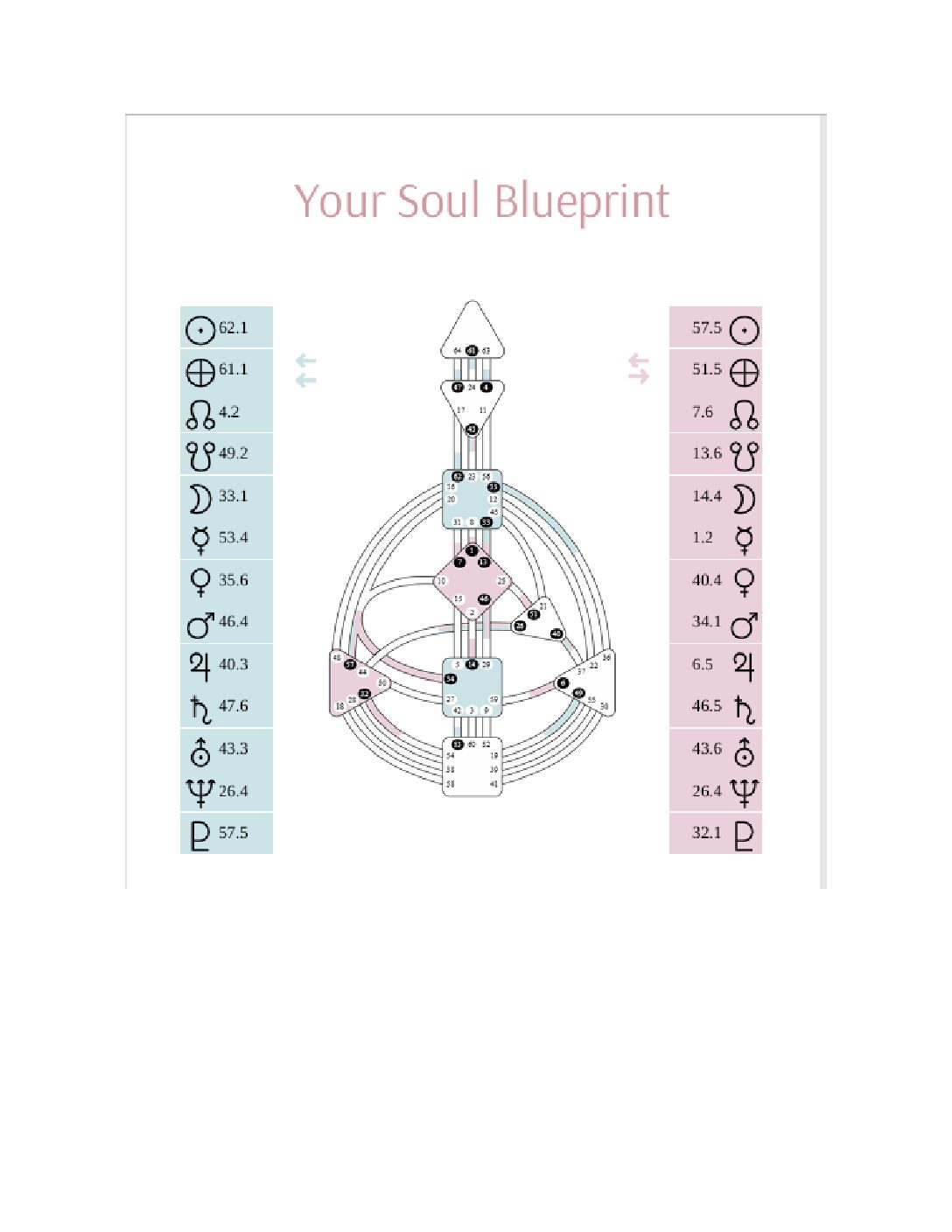
There comes a moment in many lives when the question quietly changes.
It moves from “What’s wrong with me?”
to “Who am I really?”
For most of us, this shift doesn’t happen all at once. It unfolds slowly—through exhaustion, longing, patterns we can no longer ignore, or a sense that we’ve been living slightly out of step with ourselves. We sense there is more truth available, but we don’t yet have the language for it.
This is where Human Design enters—not as a belief system, not as a label, but as a mirror.


Human Design Is Not About Becoming Someone Else
One of the greatest misunderstandings about self-discovery tools is the idea that they are meant to fix us.
Human Design does not ask you to improve yourself.
It does not offer a better personality.
It does not tell you who you should be.
Instead, it reveals who you already are beneath conditioning, expectation, and survival strategies.
Human Design is a synthesis of ancient wisdom systems and modern science, mapped through your exact moment of birth. But what makes it powerful isn’t the system itself—it’s what happens when you finally see yourself described without judgment.
For many, this is the first time their natural rhythms, sensitivities, and ways of moving through the world are reflected back as intentional, not accidental.
From Self-Judgment to Self-Understanding
Most of us were taught—explicitly or subtly—to override ourselves.
To push when we were tired.
To speak when it wasn’t aligned.
To suppress sensitivity in favor of productivity.
To distrust our inner timing.
Over time, this creates a quiet fracture. We begin living from the outside in, shaping ourselves around what seems to work, what’s rewarded, or what feels safest.
Human Design gently interrupts this pattern.
It doesn’t shame the coping mechanisms you’ve developed.
It doesn’t bypass your lived experience.
It simply shows you why certain things have always felt harder—and why others come naturally.
In this way, self-discovery becomes less about self-improvement and more about self-permission.
Seeing Your Energy Clearly
At its core, Human Design reveals how your energy is designed to move.
Some people are here to initiate.
Some are here to respond.
Some are here to guide, refine, and see deeply.
Some are here to reflect and sample the world in a unique way.
None of these roles are better than the others. But living out of alignment with your design can feel like swimming upstream—no matter how capable or well-intentioned you are.
When people first encounter their design, there is often a moment of quiet recognition.
Oh… that explains a lot.
The burnout.
The sensitivity.
The inconsistency.
The depth.
The need for space, rest, or movement.
What once felt like personal shortcomings begin to reframe as energetic truths.
The Healing That Comes From Being Seen
There is something profoundly healing about being described accurately.
Not analyzed.
Not diagnosed.
Not reduced.
But seen.
Human Design offers language for parts of ourselves that were often misunderstood—by family, by systems, and by ourselves. It validates lived experience rather than dismissing it.
And when self-discovery is rooted in validation instead of critique, something softens.
We stop forcing.
We stop comparing.
We stop abandoning ourselves to meet external standards.
We begin listening instead.
Self-Discovery as an Ongoing Relationship
Human Design is not a one-time revelation.
It’s a relationship.
A practice of noticing when you’re aligned and when you’re not.
A way of understanding why certain seasons ask for rest, while others ask for expression.
A reminder that your pace, your needs, and your way of knowing are not flaws to overcome—but signals to honor.
Over time, this awareness reshapes how you make decisions, how you enter relationships, and how you care for your nervous system.
Self-discovery becomes embodied—not intellectual.
Why This Work Matters Now
We live in a world that rewards sameness while celebrating individuality in theory.
Human Design offers a different approach. It doesn’t ask us to fit into existing structures—it invites us to understand ourselves deeply enough to move through life with integrity.
In a time when many feel disconnected from their bodies, their intuition, and their inner authority, self-discovery is not a luxury. It is a return.
A return to trust.
A return to self-respect.
A return to the wisdom that has always lived within.
An Invitation, Not a Conclusion
Human Design will not tell you what to believe.
It will not remove challenge from your life.
It will not replace discernment or lived experience.
But it may offer you something equally powerful:
Language for your truth.
Compassion for your patterns.
And permission to stop trying to be someone you were never meant to be.
Self-discovery, at its deepest level, is not about finding something new.
It is about remembering what was always there.

Leave a Reply